Learn how low-e glass benefits South Florida homes with cooler interiors, reduced UV exposure, lower energy use, and impact-window performance that lasts.
A west-facing living room in South Florida can feel noticeably hotter than the rest of the house by midafternoon, even when the air conditioning is running. That is where low-e glass benefits become immediately practical: the right glass package helps reduce solar heat entering through windows and doors while preserving the daylight and views homeowners want.
For a hurricane-prone market, however, energy performance is only one part of the decision. The best window or door system must also meet the applicable Florida Building Code, provide the required impact protection, fit the opening correctly, and be installed to the manufacturer’s approved specifications. Low-e glass can improve day-to-day comfort, but it should be selected as part of a complete, code-compliant impact window or door solution.
What Low-E Glass Actually Does
Low-e means low emissivity. The glass receives an extremely thin, transparent coating designed to manage radiant heat transfer. The coating is not a dark film applied after installation. It is typically factory-applied within an insulated glass unit, where it is protected from exposure and engineered to work with the rest of the glazing assembly.
In South Florida, the primary goal is usually solar control. A properly selected low-e coating reflects a portion of the sun’s infrared energy before it can heat the interior. It can also help block a significant amount of ultraviolet radiation, which contributes to fading on flooring, furniture, artwork, fabrics, and window treatments.
The result is not a home without sunlight. It is a home where the glass is doing more of the work. You can still have bright rooms and broad glass openings while reducing the intensity of heat that makes certain areas uncomfortable.
Low-E Glass Benefits That Matter in South Florida
Cooler rooms and less strain on air conditioning
South Florida homes operate in a cooling-dominated climate for much of the year. Conventional glass can allow substantial solar heat gain, particularly on large sliders, picture windows, and openings facing east or west. Once that heat enters, the cooling system must remove it.
Low-e glass helps lower the solar load passing through the glazing. Homeowners may notice that rooms near large glass doors remain more consistent with the thermostat setting and that direct-sun areas are less punishing during peak afternoon hours. Energy savings vary by the home’s orientation, shading, insulation, HVAC condition, and existing window performance, so no responsible contractor should promise one universal utility-bill reduction. Still, better solar control can reduce unnecessary cooling demand over time.
Greater protection from UV-related fading
Sunlight is a major part of South Florida living, but prolonged UV exposure can gradually alter interior finishes. Hardwood and vinyl flooring, rugs, leather, upholstery, cabinets, and framed artwork are all vulnerable to fading or discoloration.
Low-e coatings can reduce UV transmission, especially when paired with the right laminated impact glass construction. That additional protection is valuable in rooms with expensive finishes or large unshaded glass areas. It does not eliminate fading completely, since visible light and heat can also affect materials, but it adds a meaningful layer of defense for the interior investment behind your windows.
Better comfort near windows and doors
Comfort is not measured only by air temperature. A room can be set to 74 degrees and still feel hot when sunlight is radiating through a large glass surface. Low-e glazing helps reduce that radiant effect, making seating areas, dining spaces, and workspaces near windows more usable throughout the day.
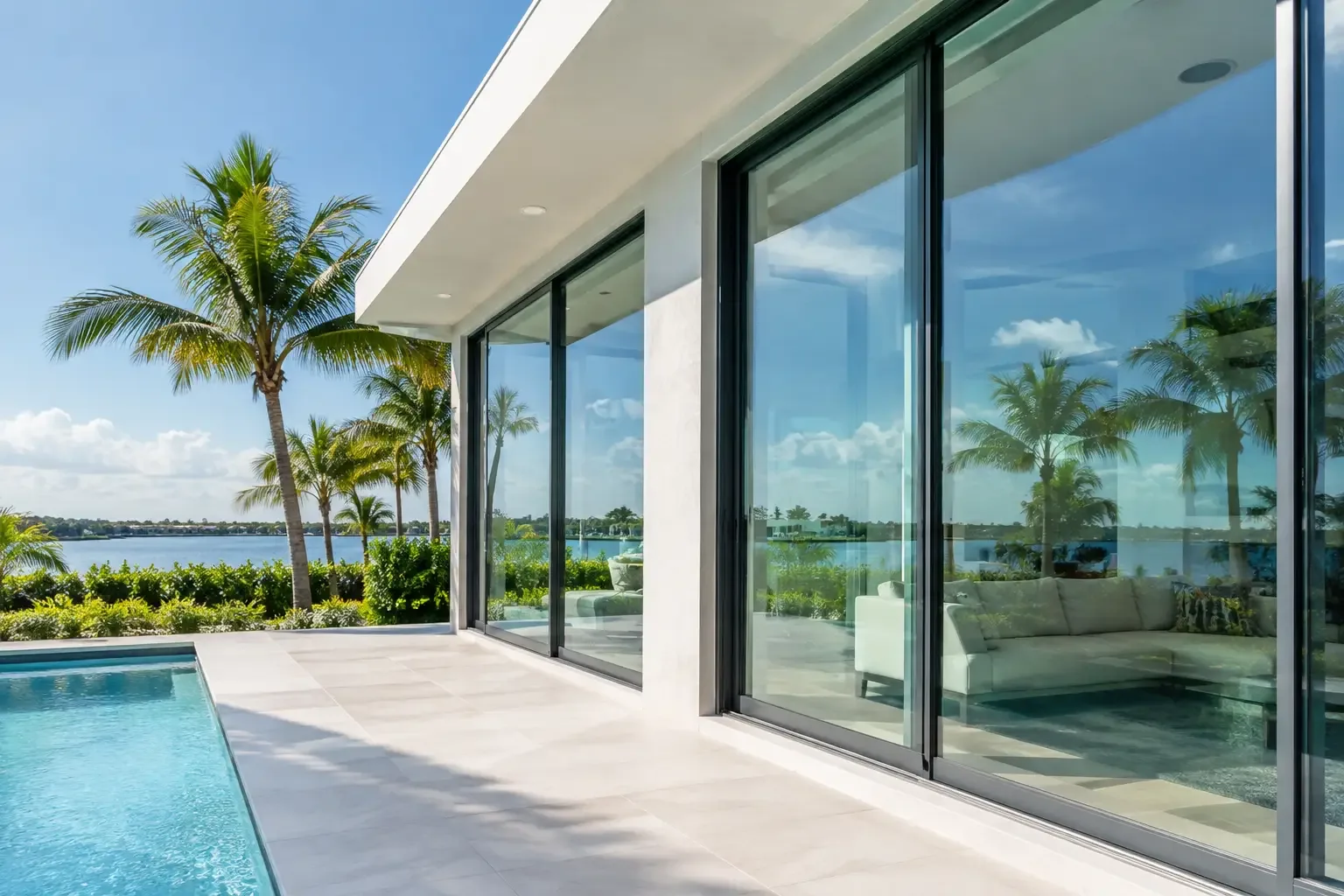
This benefit is especially relevant for open-concept homes with multi-panel sliding doors. These systems create an exceptional connection to outdoor living, but they also introduce large areas of glass. Selecting the proper low-e configuration helps preserve the architectural impact of the opening without accepting avoidable solar heat gain.
Daylight without relying on heavily tinted glass
Many homeowners want to control heat but do not want their home to look dark, gray, or overly reflective from the outside. Low-e coatings are available in different performance levels, allowing a design team to balance solar heat gain, visible light transmission, exterior appearance, and privacy needs.
A stronger solar-control coating may be appropriate for an exposed west-facing elevation, while a different option may better suit a shaded opening where maximizing natural light matters more. The right choice is not always the coating with the lowest heat-gain number. It is the one that supports the home’s exposure, architecture, and comfort priorities.
How Low-E Glass Works With Impact Windows
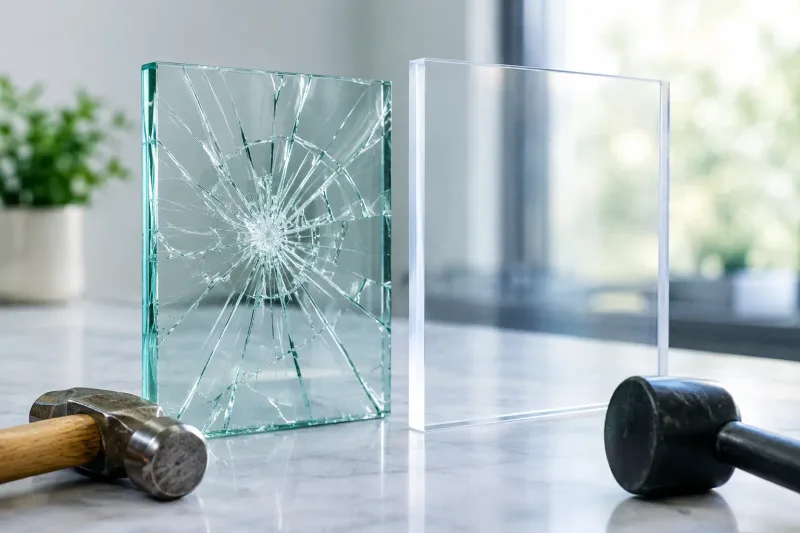
Impact-resistant windows and doors use laminated glass, typically made with two panes bonded through a strong interlayer. If the glass breaks under impact, the interlayer helps hold the fragments in place and maintains a protective barrier. This construction is central to hurricane protection and can also improve security and outside-noise reduction.
Low-e performance and impact performance are related only because they are often built into the same glazing package. One does not automatically guarantee the other. A low-e insulated glass unit must be offered within an approved impact-rated system that meets the required testing and approval criteria for the project location.
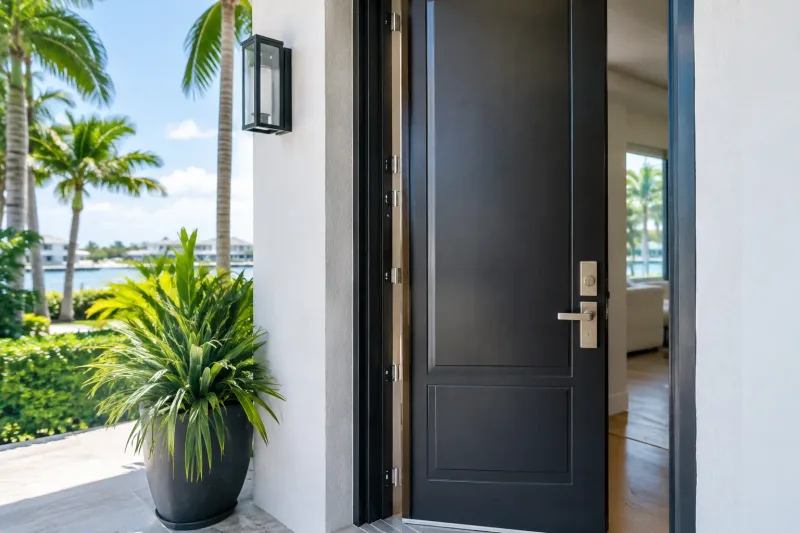
For South Florida properties, that means looking beyond the phrase “impact glass.” Confirm the system’s applicable Miami-Dade Notice of Acceptance or Florida Product Approval, design pressure rating, size limitations, anchoring requirements, and installation details. Large openings, upper-floor installations, corner conditions, and coastal exposures may require specific engineering considerations.
A quality installation matters just as much as the glass selection. Even premium products can underperform if they are improperly measured, set out of square, inadequately anchored, or not sealed according to the approved details. Water management, structural attachment, flashing conditions, and final inspections are part of the protection you are purchasing.
Reading the Performance Numbers Without Getting Lost
Window labels can include several technical values. The most useful starting point for a South Florida replacement project is the Solar Heat Gain Coefficient, or SHGC. This number indicates how much solar heat is transmitted through the window or door assembly. Lower SHGC generally means less solar heat gain, which is often desirable in hot, sunny climates.
U-factor measures how readily heat transfers through the assembly. Lower numbers generally indicate better insulating performance. While it still matters in Florida, SHGC is frequently the more influential comfort metric for glass exposed to intense sun.
Visible transmittance describes how much natural light passes through the glass. A lower-SHGC option can sometimes reduce visible light, so product selection involves a real trade-off. Homeowners who prioritize a bright, clear appearance may prefer a balanced coating rather than the most aggressive solar-control option available.
Ask to review the actual performance data for the exact window or door series and glass package quoted. Ratings can change based on frame material, glass thickness, spacer system, panel size, and whether the unit is fixed, operable, or part of a door system. A brochure image alone is not enough to compare alternatives accurately.
Where Glass Selection Requires Extra Attention
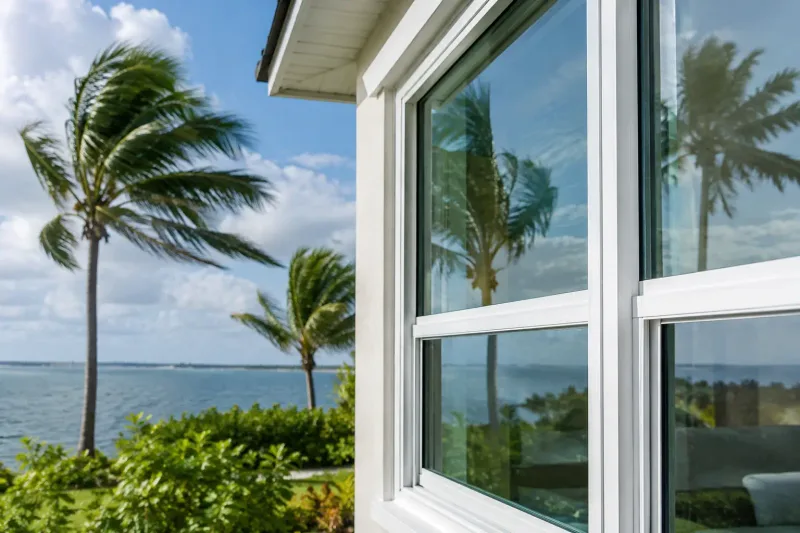
West- and southwest-facing windows usually deserve close review because they receive strong afternoon sun when outdoor temperatures are often highest. Large sliding glass doors, waterfront elevations, rooms without mature landscaping, and homes with minimal roof overhangs can also benefit from more intentional solar-control planning.
At the same time, darker glass is not always the answer. Heavy tinting can alter the exterior look of a home, reduce daylight, and make interiors feel less open. Some homeowners associations also have appearance standards that affect frame colors, grille patterns, and visible glass characteristics. Addressing those requirements before ordering helps prevent delays.
Owners should also consider condensation, although it is less common as a primary concern in South Florida than solar heat. Interior humidity control, properly functioning air conditioning, and correctly installed insulated glass units all influence how glass performs in real conditions.
Make Low-E Part of a Complete Upgrade Plan
Replacing outdated windows is an opportunity to solve more than one problem at once. A well-designed impact system can provide permanent hurricane protection, improve security, reduce exterior noise, update curb appeal, and help manage indoor heat. Low-e glass strengthens the energy and comfort side of that investment.
The process should begin with a site-specific evaluation, not a one-size-fits-all recommendation. A professional team should assess opening sizes, sun exposure, existing wall conditions, product approvals, design pressures, HOA requirements, and the type of performance you expect from each room. That information guides a package that is practical, visually cohesive, and properly permitted.
Avrax Impact Windows & Doors helps South Florida property owners coordinate those decisions from product selection through installation, inspection, and permit closure. Before choosing a glass package, ask to see the approved system details and performance values for your actual openings. That small step can help ensure your new windows deliver comfort on sunny weekdays as reliably as they protect your home when a storm approaches.