Use this reinforced door buying guide to choose hurricane-rated protection, code-compliant installation, and security for your South Florida property.
A door can be the weakest opening in a home or one of its most dependable lines of defense. When hurricane-force winds, flying debris, forced entry attempts, heat, and noise are all part of life in South Florida, choosing a door based on appearance alone is an expensive risk. This reinforced door buying guide explains what to look for before you approve a proposal, select a style, or begin a permitted replacement project.
A properly specified reinforced door should protect more than the opening itself. It should help safeguard your family and interior finishes, support Florida Building Code compliance, improve daily security, and complement the architecture of your property. The product matters, but so do the measurements, approved installation method, anchoring, permitting, and final inspection.
What a Reinforced Door Should Actually Do
“Reinforced” can mean different things depending on the product. A solid-core door with a stronger lock may improve security, but it is not automatically an impact-rated hurricane door. For homes in wind-borne debris regions, the more meaningful standard is a complete, tested, approved door system designed to resist wind pressure and impact from flying debris.
That system includes the door slab or panels, frame, hinges, locks, glass when applicable, thresholds, hardware, and anchors. These parts are engineered to perform together. Replacing only one component, such as adding stronger deadbolts to an older door, may improve burglary resistance but does not turn the assembly into a code-compliant impact opening.
For South Florida properties, ask for documentation showing the door has the appropriate Florida Product Approval or Miami-Dade Notice of Acceptance when required for your location and application. Those approvals identify critical details, including allowable sizes, glazing options, design pressure limits, anchor requirements, and installation conditions. A door can be premium quality and still be the wrong choice if its approval does not match the opening, exposure, or local code requirements.
Start With Your Property’s Real Exposure
The right reinforced door is not selected from a brochure alone. Its required performance depends on your building type, location, opening size, elevation, wall construction, roof geometry, and exposure to wind.
A waterfront home, a high-rise unit, and a single-story inland residence can each require a different approach. Larger glass areas and wider openings often face higher design-pressure demands. Doors on upper levels or exposed elevations may also need more demanding specifications than sheltered openings on the same property.
This is why a site evaluation is essential. A qualified contractor should inspect the existing opening, measure accurately, identify the wall substrate, and determine whether the existing frame, buck, threshold, or surrounding finishes need correction. The goal is not simply to make a new door fit. It is to create an opening that can perform as an approved system under the conditions it will actually face.
Impact Resistance and Wind Pressure Are Both Necessary
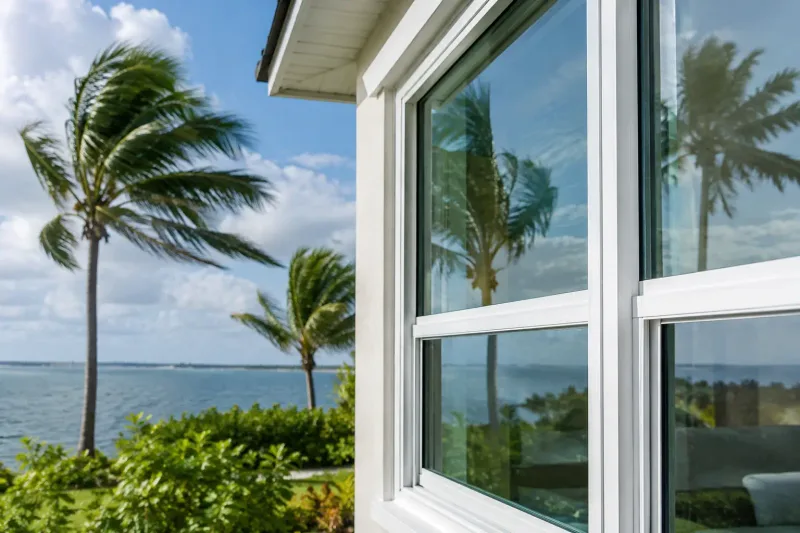
Homeowners often focus on impact glass, and for good reason. Laminated impact glass is designed to stay bonded to its interlayer when struck, helping maintain the building envelope even if the glass cracks. That can reduce the risk of wind-driven rain and dangerous pressure changes entering the home.
But impact resistance alone is not the full story. A reinforced door must also withstand positive and negative wind pressures. Negative pressure pulls outward on a door and its frame, which places serious demands on hinges, locks, anchoring, and the surrounding structure. Review the approved pressure ratings for the exact configuration, not a similar-looking model.
Be cautious with broad claims such as “Category 5 protection.” Hurricane categories describe storm wind speeds, while building-product approvals rely on tested design pressures and installation details. A responsible recommendation connects the door’s approval to your property’s code and exposure rather than relying on a marketing phrase alone.
Choose the Right Door Type for How You Live
Your preferred door style affects security, operation, light, views, and budget. It also affects the engineering required for the opening.
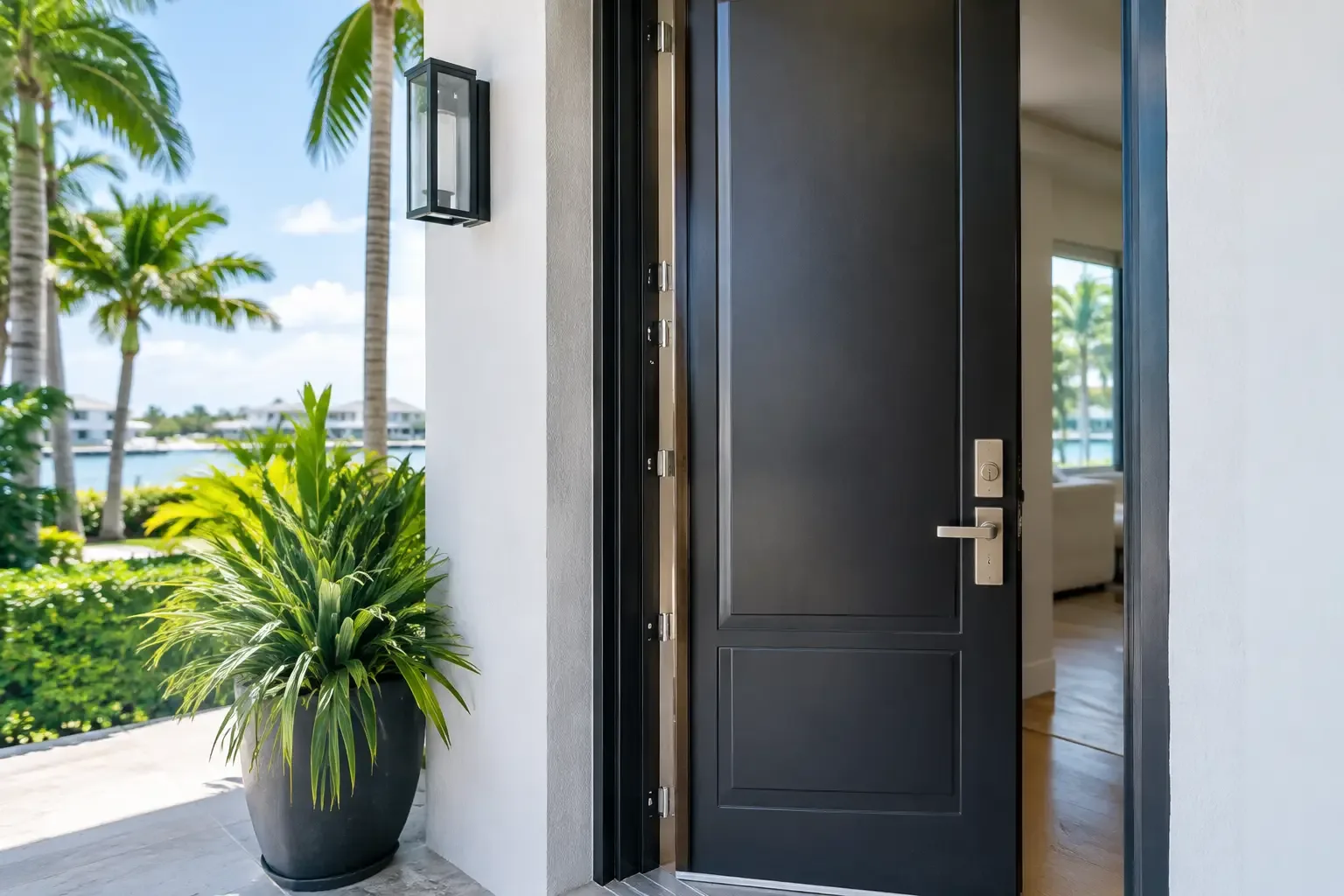
A reinforced entry door is often the strongest choice for a front entrance where privacy, security, and curb appeal are priorities. It may be a solid impact-rated system, a decorative glass entry door, or a door with sidelites and transoms. Adding glass can bring daylight into a foyer, but it also expands the area that must meet impact and pressure requirements.
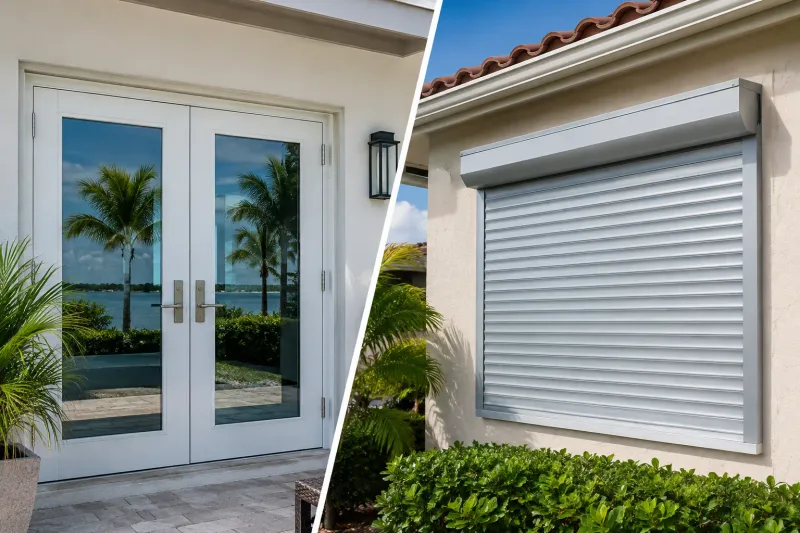
French doors create a more traditional, open feel and work well between indoor and outdoor living spaces. Their center meeting point requires careful attention to locking hardware, astragals, sill detailing, and frame alignment. High-quality impact-rated French doors can offer excellent protection, but the installation has to be precise for the active and inactive panels to seal and lock correctly.
Sliding patio doors are a popular option for wide openings, pool areas, and waterfront views. They maximize glass and daylight, yet large panels are heavy and require substantial frames, reinforced tracks, proper drainage, and smooth rollers. If the opening is especially wide, a multi-panel sliding or stacking system may provide a dramatic architectural result, but it should be designed around the required structural support and approved configuration from the beginning.
For commercial properties, the decision may include storefront-style glazing, glass entrances, aluminum systems, access-control hardware, and higher traffic demands. The product should protect the building without making daily operations difficult for employees, residents, or visitors.
Compare Proposals Beyond the Door Price
A low quote may look attractive until exclusions appear after the project begins. Reinforced door replacement is a construction project, not a delivery purchase. The most useful proposals explain the exact product and scope of work in writing.
When comparing options, confirm the manufacturer, series, glass type, finish, hardware, approved size, and stated wind-pressure performance. Also verify whether the price includes removal and disposal of the existing door, structural preparation, permits, engineered details if needed, HOA coordination, installation, exterior and interior finishing, cleanup, and inspections.
Ask how the installer will address concealed conditions. Older openings can reveal deteriorated wood, corroded fasteners, damaged stucco, uneven floors, or noncompliant framing once the original door is removed. No contractor can predict every hidden issue, but a professional should explain how discoveries will be documented, priced, and approved before additional work proceeds.
Installation Quality Protects the Investment
Even an approved impact door can underperform if installed outside its tested requirements. The anchor type, spacing, edge distance, embedment, shimming, sealant, and attachment into the substrate all matter. So do drainage paths at the threshold and the transition between the new frame and existing wall finishes.
A professional installation team should follow the product approval and permitted plans rather than using a one-size-fits-all method. For example, an installation into concrete block can require a different fastening approach than an installation into a wood-framed opening. The crew should protect nearby finishes, operate with clean work practices, and test the door’s swing, lock engagement, rollers, and weather seals before completion.
Permits and inspections are not paperwork to avoid. They provide accountability that the selected system and installation are being reviewed against applicable standards. If your property is governed by an HOA or condominium association, begin architectural approval early. Some communities control exterior colors, grille patterns, hardware finishes, and door designs, even when the replacement is an essential safety upgrade.
Do Not Overlook Daily Comfort and Long-Term Durability
The best reinforced door earns its value long after storm season. Laminated glass can help reduce exterior noise, which is especially valuable near busy roads, airports, and active neighborhoods. Insulated glass options, low-E coatings, and well-designed weather seals can improve comfort and reduce unwanted heat gain, though the energy result depends on the glass package, orientation, and overall condition of the home.
Hardware deserves the same attention as the frame and glass. Look for corrosion-resistant components suited to South Florida’s heat, rain, and salt-air conditions. Coastal properties should be especially deliberate about finishes, hinges, rollers, multipoint locks, and maintenance expectations. A beautiful door that becomes difficult to operate after a few seasons does not deliver the experience you paid for.
Color and style remain part of the decision. A reinforced door can be modern, traditional, minimalist, or highly decorative. The strongest result is one that looks intentional on the property while meeting the technical requirements behind the wall.
Before making a final decision, request the approval documents for the exact system, not a general product family. Make sure the scope identifies who is responsible for permits, HOA support, installation, inspections, and final project closure. Avrax Impact Windows & Doors approaches these details as one managed project, so homeowners are not left coordinating critical steps between separate suppliers and installers.
A reinforced door should give you confidence every time you close it - during a quiet evening, a summer downpour, or a serious storm watch. Choose the system that is approved for your property, installed to its requirements, and backed by a contractor prepared to stand behind the work.