Learn when do window seals fail, key warning signs, and whether South Florida homeowners should repair or replace aging windows before damage spreads.
A window can look intact from across the room yet already be losing performance inside the glass. Homeowners often ask, when do window seals fail? The answer depends on the window type, its exposure, and the quality of the original installation. In South Florida, relentless sun, humidity, wind-driven rain, salt air, and storm pressure can accelerate the wear that eventually compromises a sealed glass unit.
A failed seal is not always an emergency, but it is a condition worth addressing promptly. It can reduce clarity, insulation, and the polished appearance of your home while signaling that an aging window system may need closer attention.
What a Window Seal Does
Many modern windows use insulated glass units, often called IGUs. These units contain two or more panes of glass separated by a sealed spacer. The airspace between panes may be filled with air or insulating gas, helping limit heat transfer and improve interior comfort.
The edge seal around that glass package keeps moisture out and preserves the insulating space. When it breaks down, humid outside air can enter between the panes. That is why condensation, haze, or a milky appearance inside the glass is one of the clearest signs of seal failure.
It is helpful to separate an insulated-glass seal failure from other window issues. Water entering around the frame, difficulty operating the sash, deteriorated caulk, and damaged weatherstripping can also affect a window's performance, but they are not necessarily failures of the glass seal itself. A professional inspection should identify the source before a homeowner commits to a repair or replacement decision.
When Do Window Seals Fail Most Often?
There is no universal expiration date. A well-made insulated glass unit in a protected location can perform for decades, while a lower-quality unit or one facing harsh exposure may fail much sooner. Many homeowners begin seeing seal-related concerns after 10 to 20 years, although that range is only a general benchmark, not a guarantee.
In South Florida, west- and south-facing windows often experience the greatest thermal stress. Direct afternoon sun heats the glass and frame, followed by cooling at night or during heavy rain. That repeated expansion and contraction places stress on glass edges, spacers, and seals over time.
Coastal exposure adds another layer of risk. Salt-laden air, high humidity, and wind-driven rain are demanding conditions for exterior building materials. A window may still be structurally secure while the insulating glass unit has started to lose its seal. This is especially common in older homes with original windows or properties that have received years of deferred maintenance.
Storm events can also reveal a weakness that was already developing. Wind pressure, flying debris, and frame movement may stress older glazing systems. However, a seal failure after a storm does not automatically mean the glass was installed incorrectly or that impact resistance has been lost. The window should be evaluated as a full system, including glass, frame, anchors, drainage paths, and surrounding wall conditions.
Signs Your Window Seal May Have Failed
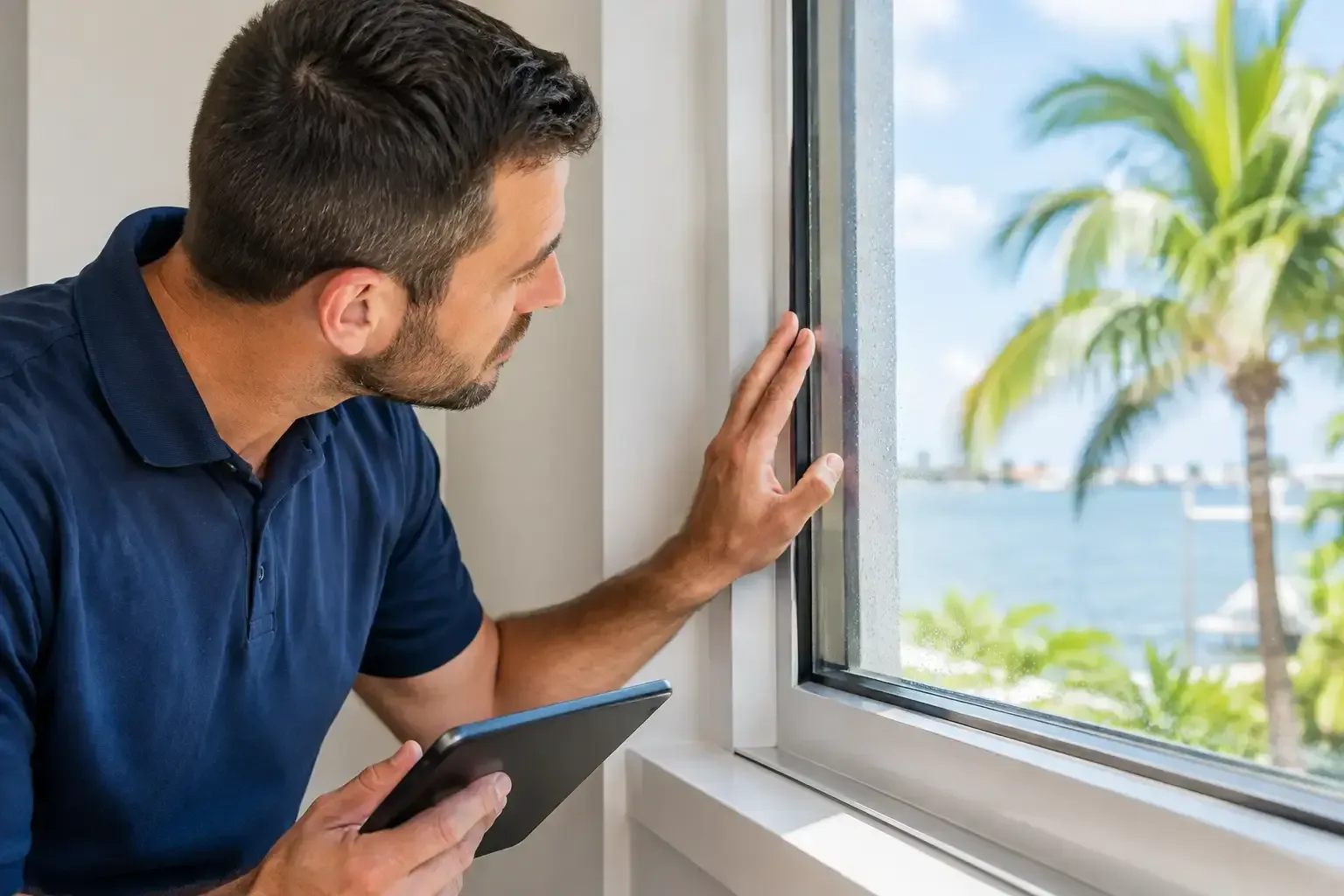
The most recognizable warning sign is moisture trapped between glass panes. Unlike interior condensation that can be wiped from the room side of a window, this fogging sits within the sealed unit and cannot be cleaned away from either side.
You may also notice a cloudy film, streaking between panes, or a distorted view through the glass. In some cases, the glass appears clearer in dry weather and hazier on humid mornings. That variation can occur as moisture inside the unit responds to changing temperature and humidity.
Other symptoms are less obvious. Rooms may feel hotter near windows, especially in direct sun. Your air-conditioning system may run longer to maintain the set temperature. Fading of flooring, furnishings, or artwork near older windows can point to inadequate glass performance, though it does not prove a failed seal by itself.
Pay attention to what you can see around the window as well. Cracked glazing beads, brittle gaskets, corrosion, loose trim, or failed perimeter caulk can allow water and air to affect the broader window assembly. These conditions deserve attention even if the insulated glass has not visibly fogged.
Why Window Seals Fail in South Florida Homes
Age is the most common factor, but it is rarely the only one. Sun exposure gradually degrades materials. Temperature swings create movement. Humidity challenges the window's ability to control moisture. Every component must continue working together for the unit to perform as designed.
Installation quality matters just as much. Even premium impact windows depend on accurate opening preparation, proper shimming, secure anchoring, correct flashing or sealant detailing, and drainage that follows the manufacturer's requirements. An improperly installed unit can place unintended stress on the frame or glass, retain water where it should drain, and create avoidable performance issues.
Building movement can contribute too. Homes settle, openings shift slightly, and surrounding materials expand and contract. In older properties, these changes can eventually affect how the window bears on the opening. Doors and large sliding glass systems deserve particular attention because their size and daily operation create additional demands on frames, rollers, and seals.
Can a Failed Window Seal Be Repaired?
It depends on the window and the extent of the problem. If only the insulated glass unit has failed and the frame remains in good condition, replacing the glass unit may be practical. This is more likely when the window style is current, the manufacturer can provide a compatible replacement, and the surrounding frame has no corrosion, damage, or water intrusion.
For many older windows, replacing only the glass can be a short-term solution with limited value. The frame, weatherstripping, hardware, and perimeter sealant may be approaching the end of their useful life as well. If several windows are fogging, leaking, difficult to operate, or not rated for current wind conditions, full replacement can offer a better long-term return.
This decision carries real trade-offs. Glass-only replacement can cost less upfront and preserve an otherwise sound frame. A complete impact-window replacement requires a larger investment, but it can improve hurricane protection, security, energy efficiency, noise reduction, and curb appeal in a single project. It also provides an opportunity to bring the opening into alignment with applicable Florida Building Code requirements.
Why Impact Windows Change the Conversation
A failed seal and hurricane protection are related but different concerns. Impact-rated windows are engineered as complete assemblies, with reinforced frames, laminated glass, tested hardware, and approved installation methods designed to resist severe wind pressures and debris impacts. Their performance depends on selecting products approved for the application and installing them correctly.
For South Florida homeowners replacing aging conventional windows, the goal should not simply be clearer glass. It should be a properly designed upgrade that protects the home during hurricane season and improves day-to-day ownership. That means considering the opening size, exposure category, required design pressures, product approvals, glass options, and the condition of the surrounding structure.
A qualified contractor should explain these details in plain language, handle measurements and product selection carefully, and manage the permit process where required. For communities with HOA requirements, approval documentation and finish selections should be coordinated before installation begins. The right project plan prevents avoidable delays and ensures that the finished work looks as strong as it performs.
What to Do When You See Fogging Between Panes
Start by documenting the condition. Take photographs when the haze or condensation is visible, note which windows are affected, and look for patterns such as the same elevation of the home or windows installed at the same time. If the windows are still under a manufacturer warranty, this information may be useful.
Avoid drilling through the glass, attempting to inject chemicals, or relying on temporary defogging treatments. These approaches may improve appearance briefly, but they do not restore the original sealed insulating space or the window's designed performance. They can also complicate warranty claims and create additional damage.
Instead, arrange a professional evaluation of the glass and the entire opening. The assessment should determine whether the problem is isolated to an IGU, related to frame deterioration, or part of a larger replacement need. At Avrax Impact Windows & Doors, that project-level approach helps homeowners make a decision based on safety, code compliance, appearance, and long-term value rather than fogging alone.
A cloudy pane does not have to become a rushed decision. Address it before moisture, heat gain, or broader window deterioration takes a larger toll, and use the opportunity to choose a solution that gives your property dependable protection and lasting peace of mind.