Learn when to replace cracked impact glass, which cracks require urgent action, and how South Florida owners protect safety, code compliance, and value.
A hairline crack across an impact window can feel like a small cosmetic problem - until the next severe storm, wind-driven rain event, or attempted break-in tests that opening. Knowing when to replace cracked impact glass helps South Florida property owners protect their family, avoid water intrusion, and preserve the performance they invested in.
Impact glass is built to do far more than standard window glass. Its layers, interlayer, frame connection, and installation work together as a tested system designed for high winds and flying debris. A crack does not always mean the opening has failed immediately, but it does mean the unit should be evaluated promptly by an experienced impact-window professional.
A Crack in Impact Glass Is Not Just a Surface Issue
Most impact windows and doors use laminated glass: two panes bonded around a durable interlayer. During an impact event, the glass may crack, but the interlayer is designed to help keep the broken glass in place and maintain a protective barrier. That is a major advantage over conventional glass, which can shatter and leave an open path for wind, rain, and debris.
Still, impact glass is not intended to remain damaged indefinitely. Once a pane is cracked, its original tested condition has changed. The crack can spread with heat, pressure changes, door movement, or vibration. It can also create a path for moisture to reach the insulated glass space, glazing seals, or frame components.
The right decision depends on the crack’s location, depth, cause, and whether the entire window or door system remains secure. A professional inspection should look beyond the visible glass line to assess the frame, sash, sealant, hardware, and anchoring conditions.
When to Replace Cracked Impact Glass Immediately
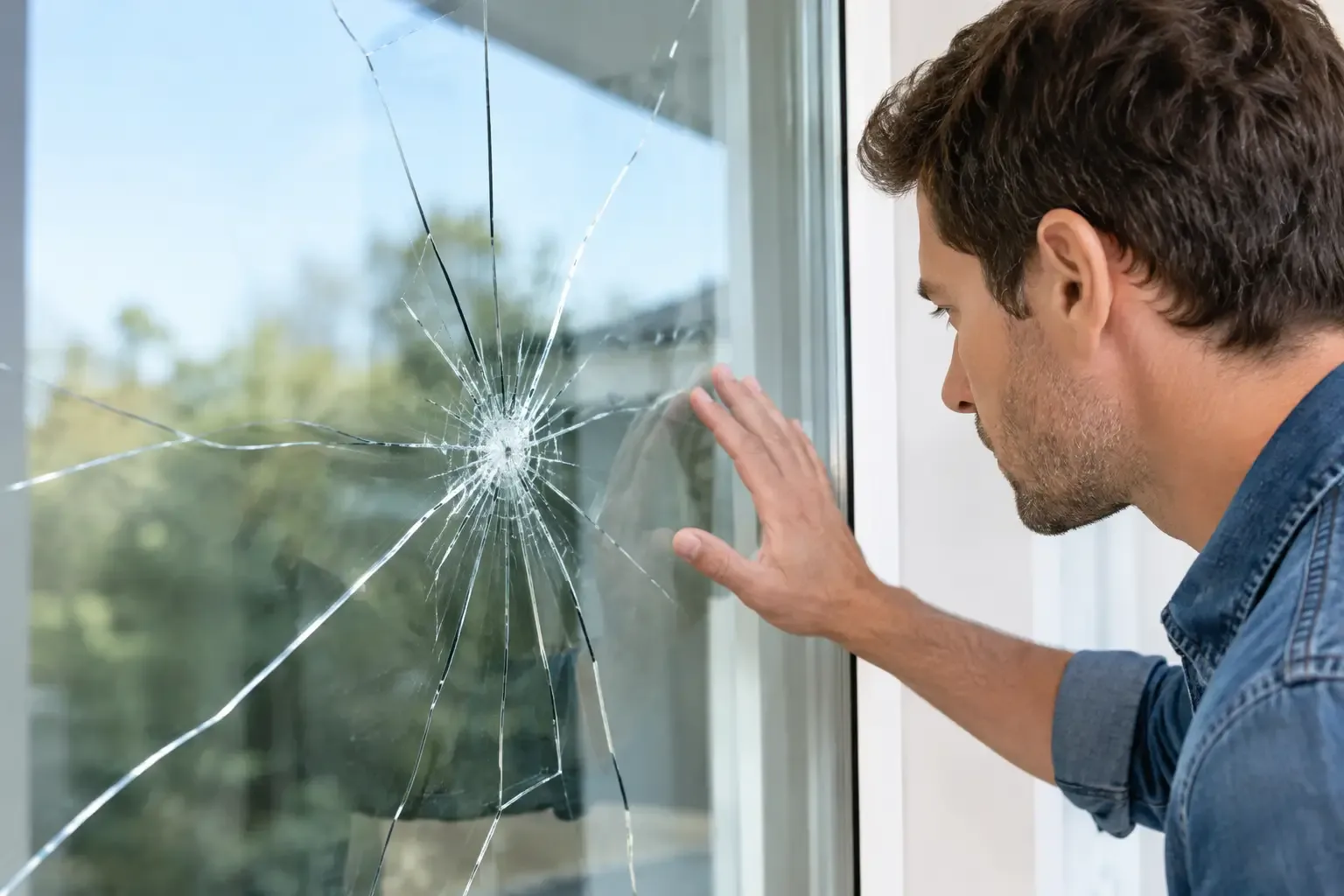
Certain conditions call for prompt replacement rather than monitoring. If a crack reaches the edge of the glass, runs across a large portion of the pane, or forms a spiderweb pattern after an impact, schedule service as soon as possible. Edge cracks are especially concerning because they can spread quickly and may affect how the glass is supported within the frame.
Replacement should also move quickly when the crack follows a hurricane, fallen debris strike, break-in attempt, construction accident, or other known impact. Even if the glass remains held together, the event may have stressed the laminated assembly or damaged components that are less visible from inside the home.
Do not wait if you see water entering around the opening, hear rattling during wind, notice a loose sash or door panel, or find damaged glazing beads, seals, locks, or tracks. On a sliding glass door, a cracked panel combined with difficult operation or a misaligned lock is a security concern as well as a weather-protection concern.
For commercial properties, prompt action is particularly important when cracked glass is near public entrances, walkways, storefronts, or occupied work areas. Building managers need to protect occupants while maintaining the building envelope and a professional appearance.
When a Short Evaluation Period May Be Reasonable
Not every line in glass is an emergency. A very small crack away from the edge, with no sign of spreading or water intrusion, may allow time to arrange an inspection and order the correct replacement panel. The key word is short. It should not become a repair that sits on a maintenance list for months.
First, make sure it is actually a crack. Surface marks from cleaning tools, mineral deposits, adhesive residue, or a scratch in a coating can resemble damage under certain light. A true crack typically has a defined line that catches a fingernail or appears differently from opposite sides of the glass.
Fogging between panes is different from a crack, but it also deserves attention. It often signals a failed insulated-glass seal. The window may still provide a barrier, yet reduced insulation, internal moisture, and compromised clarity can affect comfort and appearance. A qualified contractor can determine whether the insulated glass unit can be replaced within the existing frame or whether the complete unit should be considered.
Why Replacement Is Often Better Than Glass Repair
Homeowners understandably ask whether cracked impact glass can simply be repaired. Cosmetic resin repairs may be appropriate for certain auto-glass chips, but residential and commercial impact glazing is a different system with different performance requirements.
A repair cannot restore the original factory-laminated construction, insulated seal, or tested design pressure performance of a cracked impact glass unit. It may improve appearance in limited situations, but it should not be represented as a return to the window’s original hurricane-rated condition.
In many cases, the practical solution is replacing the damaged glass assembly while retaining the existing frame, provided the frame and operating components are in good condition and the manufacturer supports that approach. This can be a cost-conscious option for a newer, properly installed impact window or door.
Full window or door replacement may make more sense when the frame is warped, corroded, leaking, outdated, or no longer compatible with available replacement glass. It can also be the better long-term investment when several openings are aging or when the property still has a mix of older non-impact units and newer impact products.
The Cause of the Crack Matters
Understanding why the glass cracked helps prevent a repeat problem. Storm debris is an obvious cause in South Florida, but it is not the only one. Thermal stress can occur when one portion of glass heats significantly faster than another, such as when heavy exterior shading meets intense sun exposure. Improper pressure from installation, a shifting frame, slamming doors, nearby construction vibration, or accidental contact can also contribute.
A crack near a corner may indicate stress from the frame or glass setting. A long, clean line that begins at an edge can point to thermal stress or installation pressure. A concentrated star-shaped break often suggests direct impact. These are patterns, not final diagnoses, which is why the inspection matters.
When replacement is completed, the contractor should verify the new glass is correctly sized, properly set, sealed, and compatible with the approved frame system. Installing a high-quality replacement panel without addressing a frame or drainage issue only invites another problem.
Protect the Opening While You Arrange Service
Avoid placing tape directly across a crack as a substitute for repair. Tape may temporarily help contain loose fragments in limited circumstances, but it does not restore strength or weather resistance. Do not drill the glass, apply aftermarket films over damaged areas, or try to force a cracked sliding panel back into alignment.
Keep the area clear, especially if the inner pane is damaged or glass fragments are visible. If weather is approaching and the opening cannot be secured, contact a qualified professional for temporary protection appropriate to the situation. The goal is to prevent injury and water intrusion without causing further damage to the window, door, or surrounding finishes.
Take clear photos before any temporary measures are installed. Document the date, visible damage, suspected cause, and any water intrusion. This information can be useful for warranty review, insurance documentation, property records, and a contractor’s assessment.
Code Compliance and the Value of a Proper Replacement
South Florida impact openings are not interchangeable pieces of glass. Product approvals, glass thickness, interlayer type, frame profiles, reinforcements, hardware, and installation details all contribute to system performance. Replacing damaged glass with a non-approved or incompatible panel can undermine protection and create code, warranty, and insurance complications.
Permit requirements vary by municipality, scope of work, and product configuration. HOA-controlled communities may also require documentation before exterior work begins. A full-service impact-window contractor can identify the appropriate replacement path, coordinate required paperwork, and ensure the work aligns with Florida Building Code requirements and applicable Miami-Dade approvals.
At Avrax Impact Windows & Doors, that project accountability includes helping property owners evaluate whether glass-only replacement is appropriate or whether a larger upgrade will deliver better protection, energy performance, security, and long-term value.
Do Not Let a Small Crack Decide the Timing for You
A cracked impact window or door does not always require panic, but it does require a professional decision. The earlier the damage is evaluated, the more options you may have to protect the opening before a storm, prevent moisture damage, and preserve the appearance of your property.
If the glass is cracked, spreading, leaking, loose, or damaged after an impact, arrange an assessment before the next weather event puts the system to work. Peace of mind comes from knowing the opening is not merely intact - it is ready to perform when your home or business needs it most.